By Garry Sanossian
When you ask Pastor Allan Vincent about the life of Dubbo Community Church, you may be surprised that his answer has little to do with Sunday services. Instead, he quickly points to the church’s practical partnerships with local ministries and services.
Whether supporting Emmanuel Care in providing social support and justice for people in need or working alongside Tradies in Sight to companion tradesmen and women in an industry facing high rates of suicide, these connections have become central to the life and mission of the church.
This focus reflects a deeper shift taking place within the congregation. In recent years, one of the church’s key questions for cultural growth has been: How do we become a church that exists beyond our Sunday gatherings and church building?
As Allan shares more, it becomes clear he believes the local church is not meant to exist for itself.
“Church is both the local fellowship and the wider body of Christ,” he said.
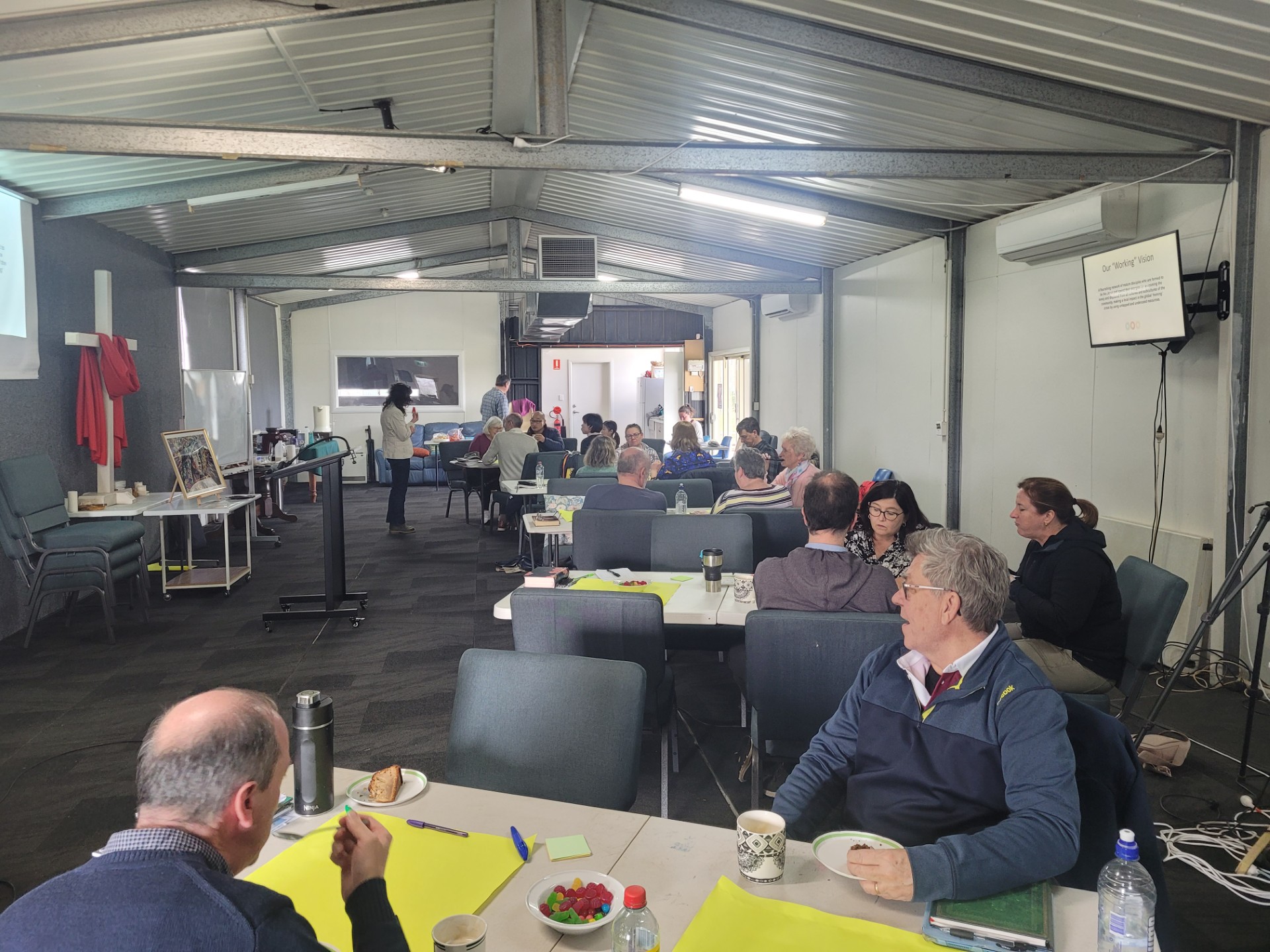
A gathering at Dubbo Community Church.
While the local congregation plays an important role, Allan believes Christians are called to partner with the wider body of believers working together for the kingdom of God wherever possible, and for him, that begins with relationships.
“Rather than seeing church as a place people attend once a week, we are seeking to cultivate a community that reflects Christ in homes, workplaces, schools and neighbourhoods.”
For church member Megan, this means intentionally reflecting Jesus in ordinary conversations and relationships.
“I suppose part of what it is, is loving whoever God puts in front of you,” she said.
“Outside the church, it’s taking every opportunity to bring Jesus into a conversation. Even if you don’t actually get to talk about Him, it’s having that intention and that focus.”
This relational emphasis is expressed through the church’s philosophy of partnering with organisations already doing meaningful work in the town, rather than creating its own programs which, as a small congregation of about 50 regulars, they do not always have the resources to sustain.
Instead, members volunteer with local initiatives, support community ministries, and contribute their time and resources to work that is already serving people in need.
“We partner, resource and help different organisations with various ministries using what we have,” Allan said.
This perspective also shapes how believers view their everyday calling, with many members of the church serving as teachers, health workers and support staff across different sectors in the community. Allan encourages them to see these spaces as places where their faith can be lived out.
Sometimes this means offering support to a colleague going through a difficult season, while at other times it may be as simple as listening to someone’s story or being present during moments of grief. Being relational has become one of the main ways members live out their faith in the community.
“I do a lot of one-on-one coffee catch-ups, and that is always my prayer going into it,” Megan said.
“Just making sure that we’re bringing God into every situation.”
One way the church encourages a deeper awareness and capacity to engage with the world around them is through a quarterly gathering called “Let’s Have a Conversation.” On these Sundays, the usual sermon format is set aside and the congregation gathers for a facilitated discussion around real-life issues.
Conversations have included grief, addiction, parenting, gender identity, neurodiversity and other topics people are navigating in their daily lives. The goal is not to provide quick answers or deliver a theological explanation, but to help people grow in confidence and compassion when engaging with others.
“The idea is: how do we provide tools and experience for people to lean into conversations with a work colleague or family member and not shy away from them,” Allan said.
Megan said the conversations have helped members consider how to respond to people with greater compassion, especially when navigating difficult or deeply personal topics.
“Most of them I’ve come away with stretchy love,” she said.
“We’ve just got to love people no matter what they’re going through.”
She added that the gatherings also give people practical tools they can carry into everyday relationships.
“It always gives examples or tools that you can take back to your workplace and kind of have a better listening heart,” Megan said.
“They might just need a listening ear.”
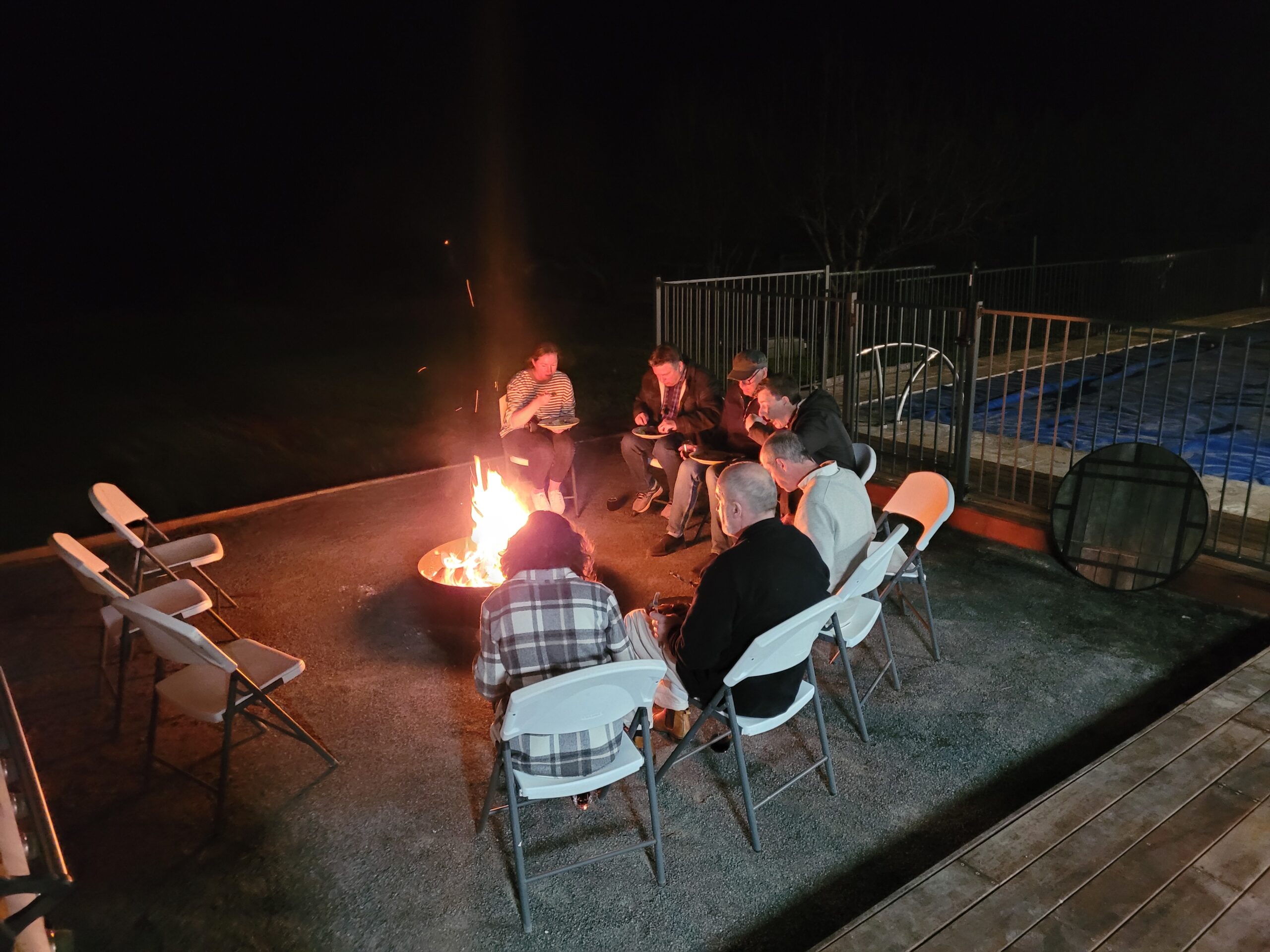
Conversations around the campfire.
These conversations are carefully facilitated and guided by clear boundaries, helping create a respectful and constructive environment. Over time, the church has built a culture where people feel safe enough to share their experiences and pray for one another.
Megan believes that sense of safety matters, especially when people are learning how to engage with complex issues beyond the church setting.
“I think if you have a safe place at your church that you can talk openly and listen to other people, then you can feel a little bit more confident in having those conversations outside of the church,” she said.
For Megan, the value of these gatherings is not only in what happens during the service, but also in what people do with those conversations afterwards.
“We always encourage them to take it back to their home groups or talk about it with other people during the week and don’t just leave it at the church service,” she said.
While the fruit of these conversations may not always be visible on a Sunday morning, Allan believes their impact is often seen throughout the week in the way people interact with others.
“Our fellowship desires to be Kingdom-Focused, Relational, and Spirit-Led in all parts of life, which can happen when we recognise that real growth and seeing fruit comes from growing deeper in our relationship with God and reflecting the heart of Jesus,” Allan said.
He believes that when Christians are attentive to these opportunities, they begin to reflect the character of Jesus in practical ways.
“The church is the people of God,” Allan explained. When believers carry their faith into the ordinary rhythms of life, the mission of the church extends far beyond any building.
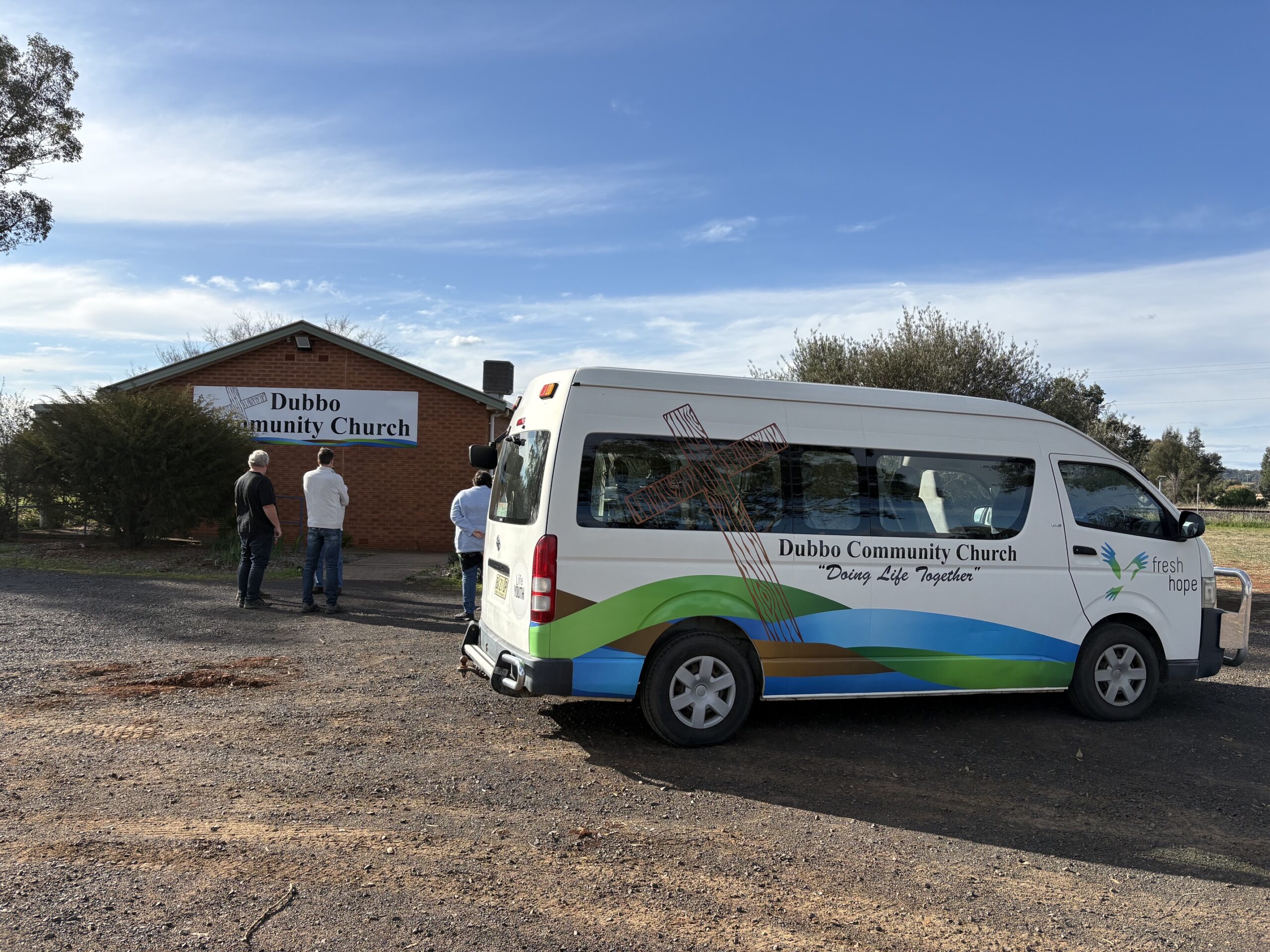
Dubbo Community Church’s bus can often be seen out and about.
Visit the Dubbo Community Church website at dubbocommunitychurch.net
Page Feedback